Launch offer — valid today only

📄 Digital book in PDF · read it on your phone or print it

Your Private Well, From the Pump to the Water Test, in Drawings One Topic on Every Page

The whole-system cutaway, submersible and jet pumps, the pressure tank, the pressure switch, the troubleshooting tree, water testing, shock chlorination and seasonal care. Each topic has its own page: the drawing first, then what you need to remember. 64 illustrated pages.

SHOW ME MY WELL, ALL DRAWN

🔒 Secure checkout · PDF by email · 30-day guarantee

Every topic, its own pageEvery part and every procedure drawn, with the explanation right beside it
64 illustrated pages8 parts, from the whole-system cutaway to buying a home with a well
Up-to-date sourcesChecked against U.S. EPA and CDC private well guidance · points you to your state agency for local rules
PDF by emailFormat

Look Inside the Book

Every page has one big drawing and a box with the numbers, steps and checks you need to know:

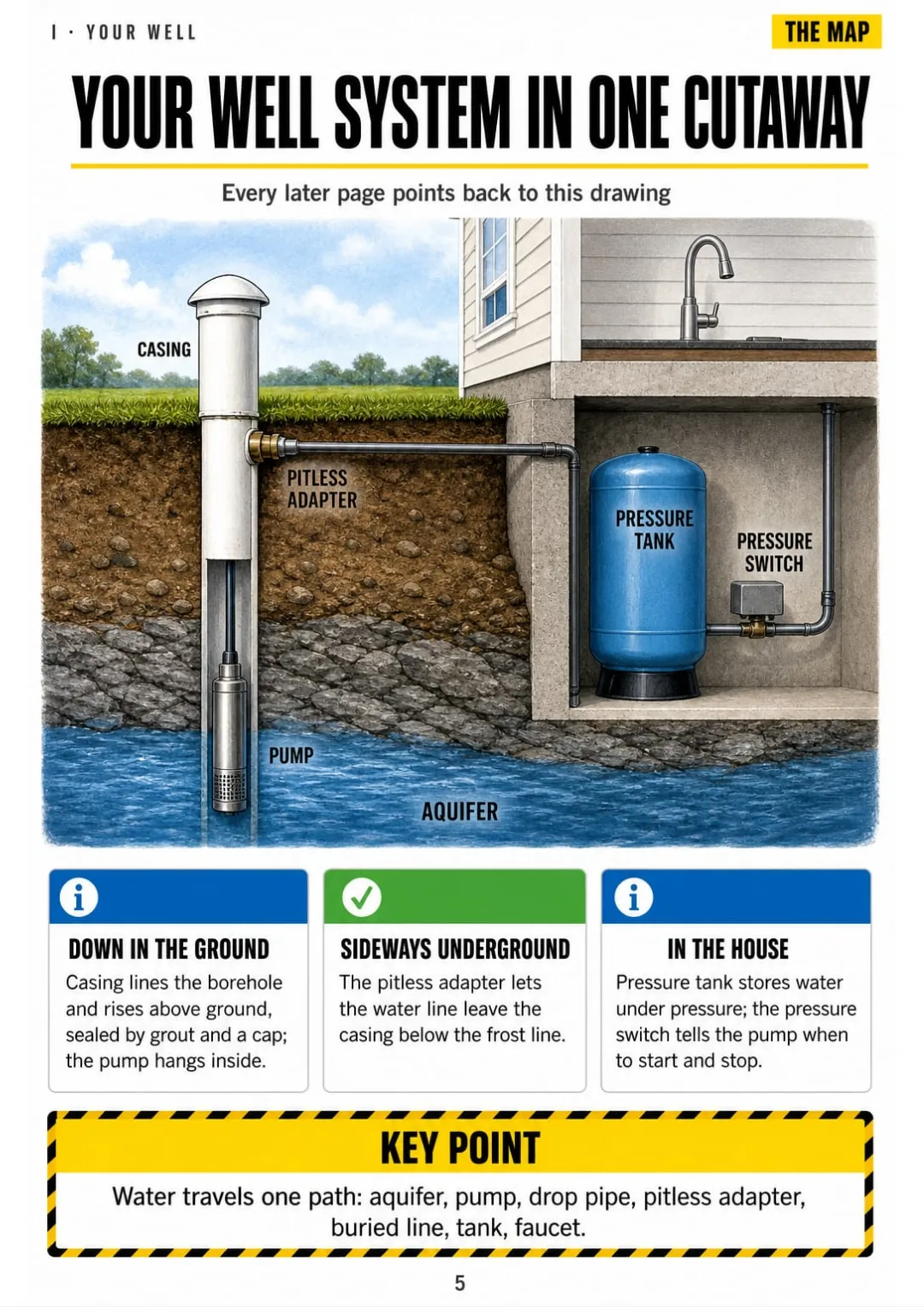
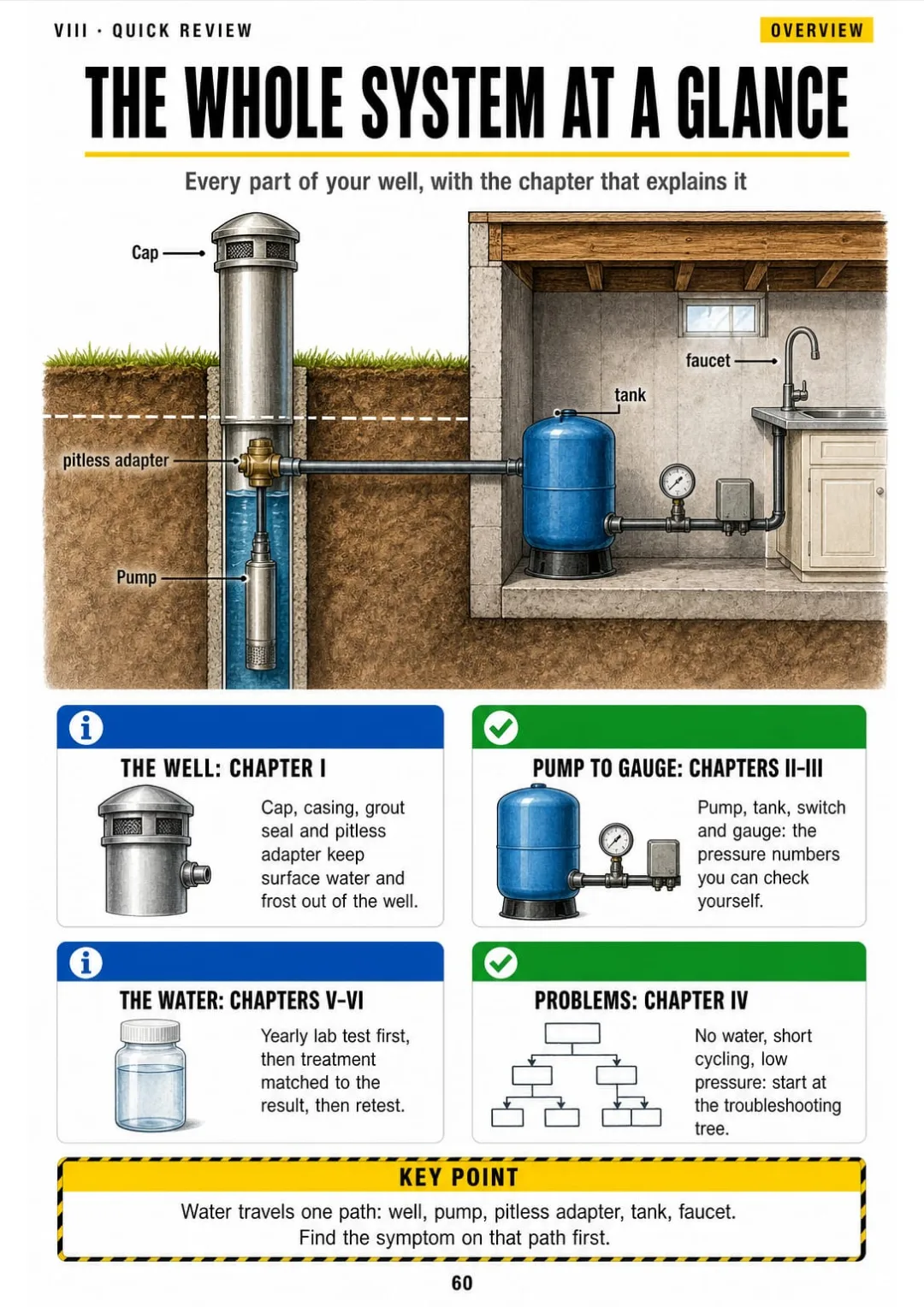
One cutaway, nine parts: aquifer, casing, pump, drop pipe, pitless adapter, line, tank, switch, house.
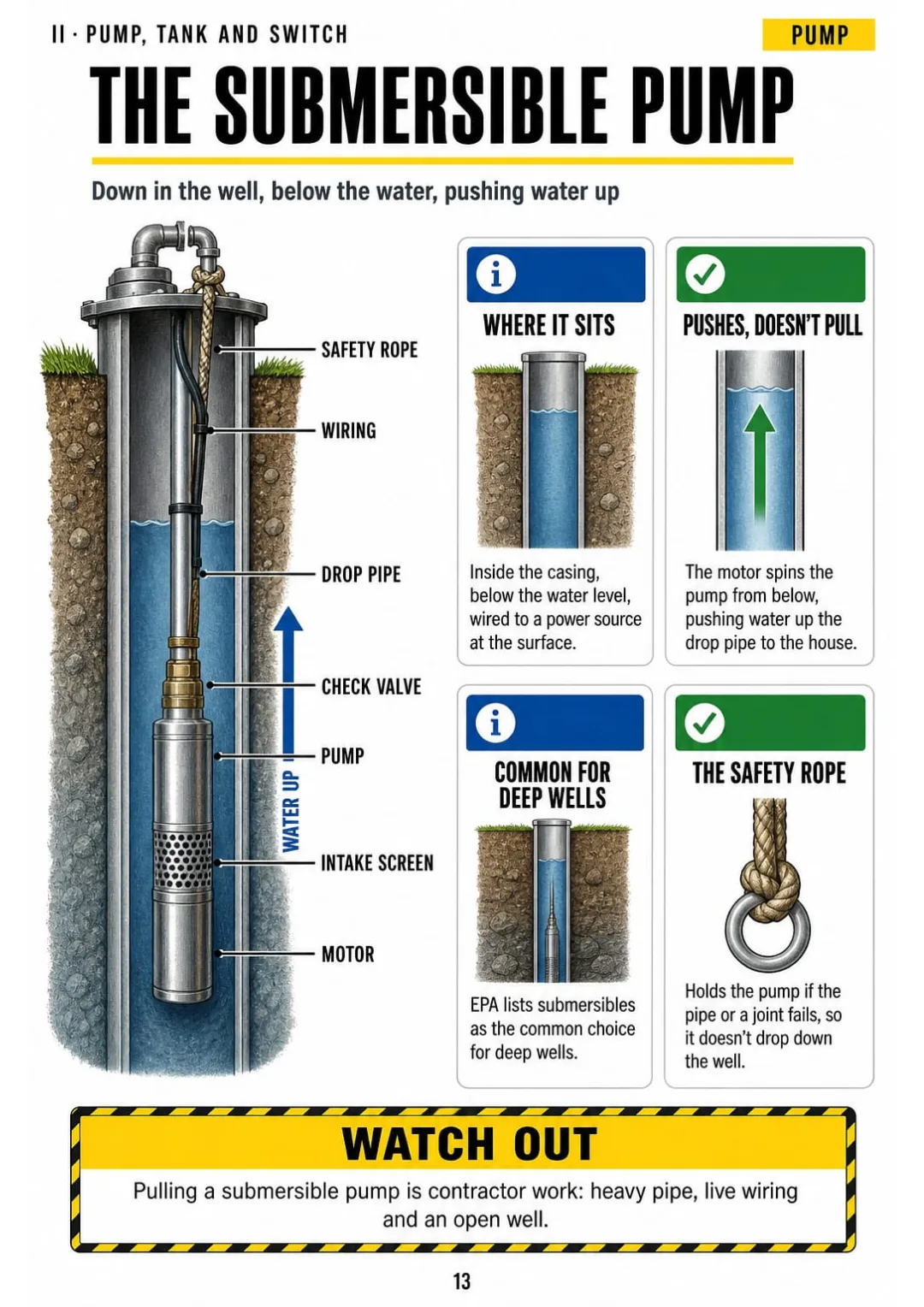
Motor, intake screen, check valve, safety rope: the submersible pump drawn part by part.
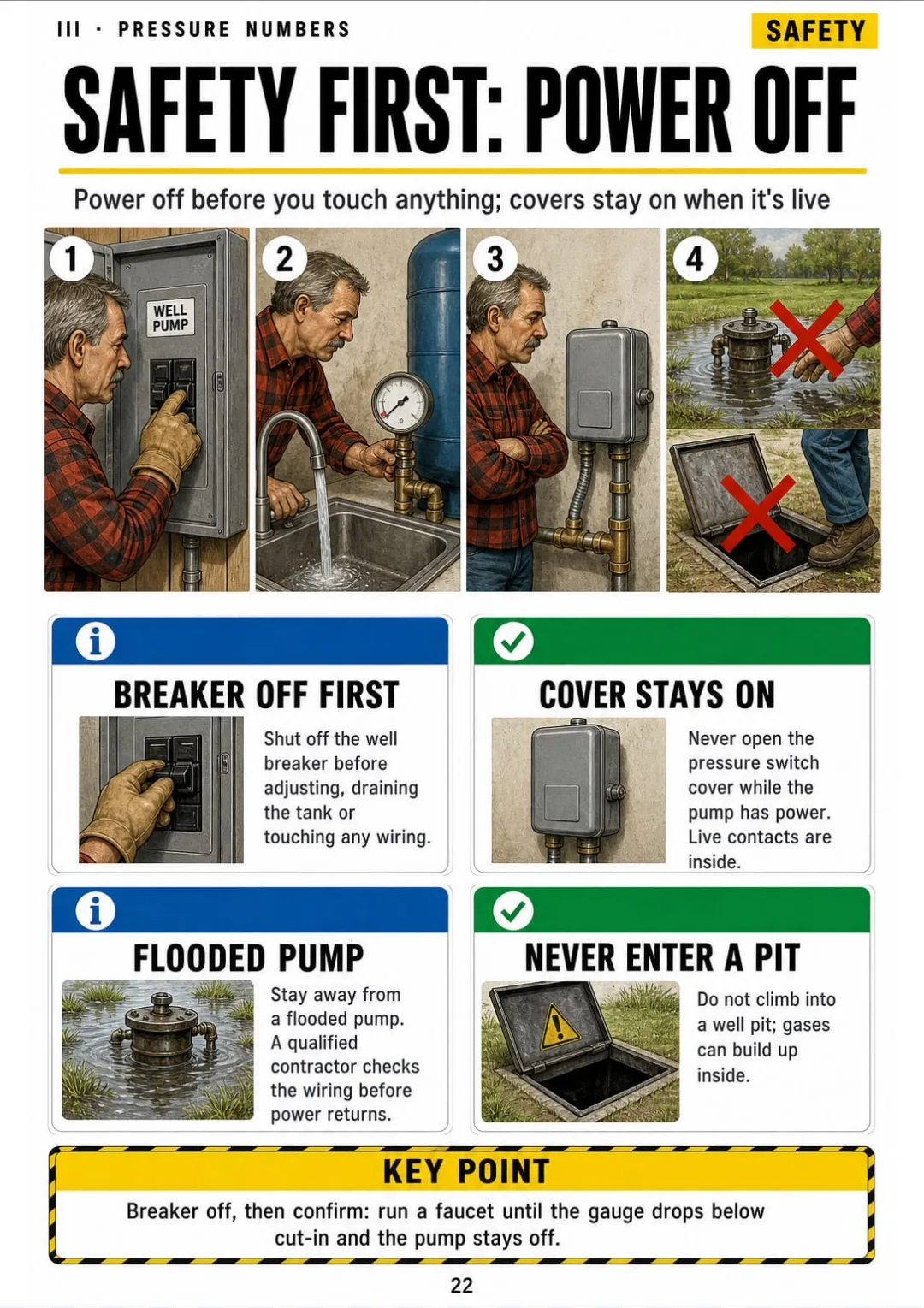
Breaker off, confirm off, cover on, never into a well pit: the 4 safety rules.
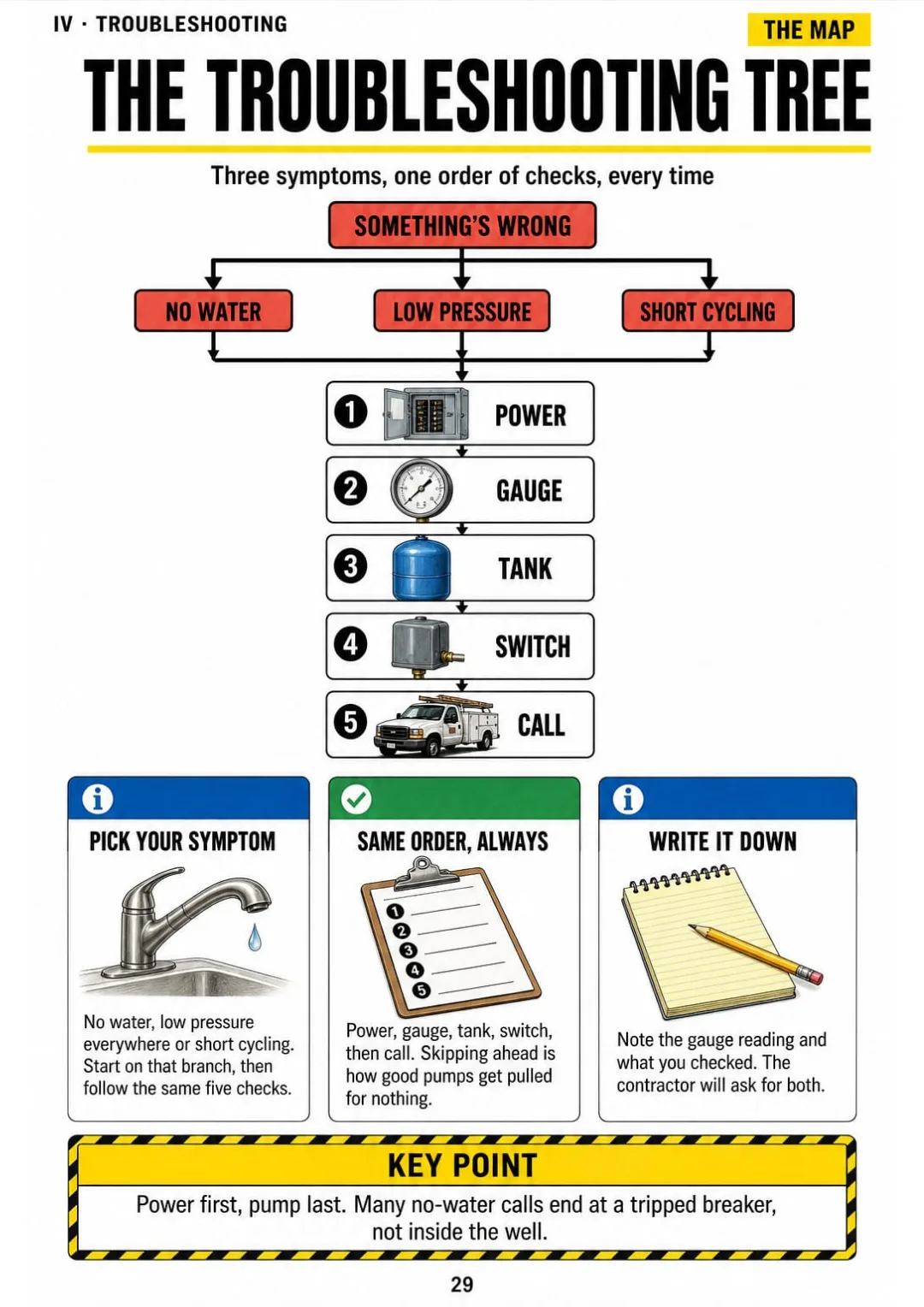
Three symptoms, five checks, always in the same order
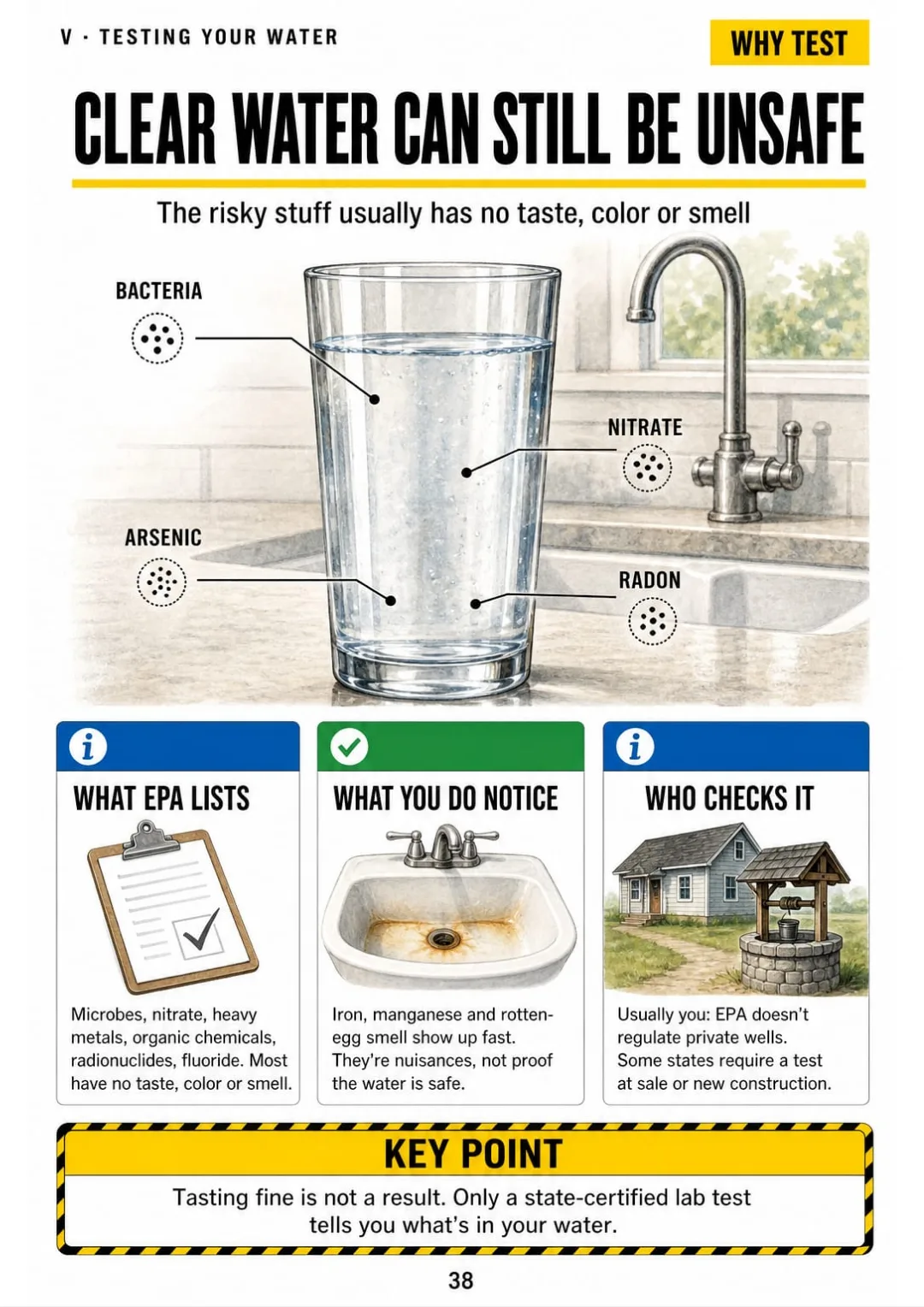
Bacteria, nitrate, arsenic and radon: invisible in the glass, visible only on a lab report.
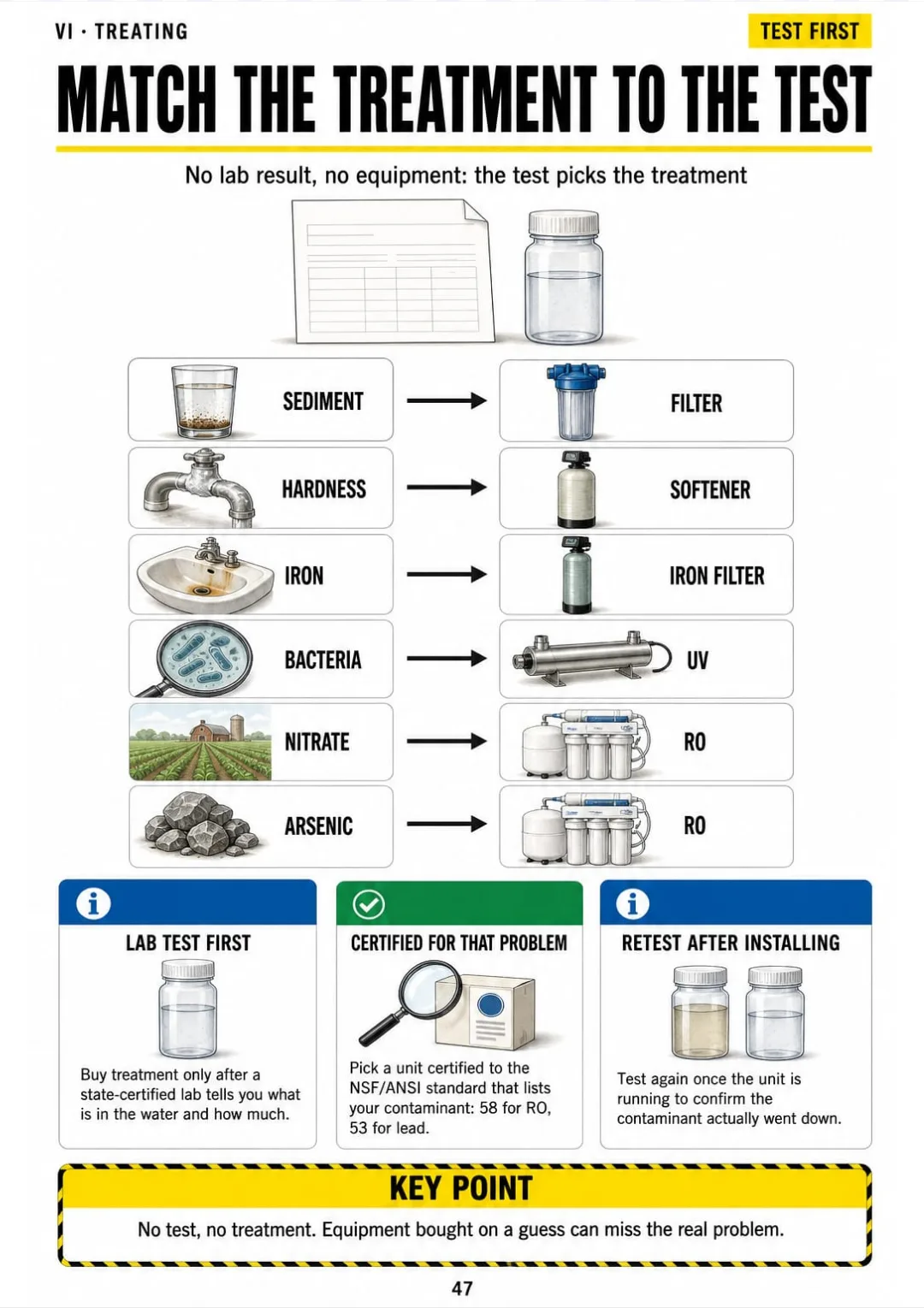
Six problems, five treatment types: test first, buy certified, retest after.
Spring check: cap tight, casing intact, seal uncracked, ground sloping away from the well.
One cutaway, wellhead to faucet: cap, casing, pitless adapter, pump, tank, switch and gauge.

Swipe to see more →

These are real pages from the book. The table of contents is the full one: 8 parts and 60 topics.

The Problem Isn't You. It's How It Was Explained.

You're standing in the pump house, the pump keeps clicking, and you want to pull the cover off the pressure switch. But which breaker feeds it, and is it really off?

The pump manual covers it in one paragraph of small print, somewhere between the warranty terms and the wiring diagram. Safety buried in a paragraph is easy to skip when the shower just quit.

Breaker off, confirm off, cover on, never into a well pit: the 4 safety rules.

In the book, power-off is one page: the breaker drawn in the off position, the check that confirms it's off, the cover back on, and the well pit you never climb into. Four rules, four drawings.

The pressure switch, the tank air charge, the check valve, the troubleshooting tree and shock chlorination get the same treatment: each one has its own page.

You know what to do first and why, without digging the manual back out of the drawer.

COMPARE FOR YOURSELF

The Same Topic, Two Ways to Learn It

THIS
  • The manual: line after line of small print
  • Pump parts explained only in words
  • You walk into the pump house still unsure
The submersible pump assembly consists of a hermetically sealed electric motor coupled to a multistage centrifugal pump end, installed within the well casing below the pumping water level. Water enters through the intake screen located between the motor and the pump stages, where successive impellers and diffusers increase discharge pressure. A check valve, integral to the pump discharge or installed in the drop pipe, prevents backflow upon motor de-energization, while a safety rope secured at the wellhead facilitates retrieval and limits the consequences of a fitting failure.
FOR THIS
  • The submersible pump in one drawing
  • Motor, intake screen and check valve labeled in a box
  • You see it and you get it
Motor, intake screen, check valve, safety rope: the submersible pump drawn part by part.
CONTENTS

Take a Look at the 8 Parts and 60 Topics

Your well top to bottom, the pump, tank and switch, the pressure numbers, troubleshooting, water testing, treatment and disinfection, season-by-season care and a quick review: 64 pages, all illustrated

IYour Well, Top to Bottom · pp. 5-12
  1. The Whole System in One Cutaway
  2. Drilled, Driven or Dug: Which Well Do You Have?
  3. Where Your Water Comes From
  4. The Casing and the Grout Seal
  5. The Well Cap
  6. The Pitless Adapter
  7. Your Well Records: What to Find First
  8. Who Regulates a Private Well
IIPump, Tank and Switch · pp. 13-21
  1. Submersible Pump: How It Works
  2. Jet Pump: Shallow vs Deep
  3. Which Pump Is Yours? A 30-Second Check
  4. The Pressure Tank: Air Above, Water Below
  5. Drawdown: How Much Water the Tank Gives
  6. The Pressure Switch
  7. Check Valves and Why They Matter
  8. Pressure Gauge, Tank Tee and Valves
  9. Constant-Pressure Systems
IIIPressure Numbers You Can Check · pp. 22-28
  1. Safety First: Power Off Before Anything
  2. Reading Your Gauge Through One Cycle
  3. Checking Tank Air Pre-Charge
  4. Worked Example: 30/50 System
  5. Worked Example: 40/60 System
  6. Pump Run Time and Cycles
  7. Measuring Flow in Gallons per Minute
IVWhen Something Goes Wrong · pp. 29-37
  1. The Troubleshooting Tree
  2. No Water: Check Power First
  3. No Water: Pump Runs but Nothing Comes
  4. Short Cycling: Pump On-Off Every Few Seconds
  5. Low Pressure at Every Faucet
  6. Low Pressure at One Faucet
  7. Pump Runs and Never Stops
  8. Spitting Faucets and Air in the Water
  9. When to Call the Pro
VTesting Your Water · pp. 38-46
  1. Why Clear Water Can Still Be Unsafe
  2. The Yearly Test
  3. Test Again When This Happens
  4. What Your Area Can Add to the List
  5. Finding a State-Certified Lab
  6. Taking a Bacteria Sample, Step by Step
  7. Reading a Coliform Result
  8. Reading Nitrate, Arsenic and Lead
  9. Nuisance Results: Iron, Manganese, Hardness
VITreating and Disinfecting · pp. 47-53
  1. Match the Treatment to the Test
  2. Point of Entry vs Point of Use
  3. Sediment Filters and Softeners
  4. UV Disinfection
  5. Reverse Osmosis and Certified Units
  6. Shock Chlorination: What It Does
  7. Shock Chlorination: Planning the Volume
VIISeason by Season · pp. 54-59
  1. Spring: Inspect the Wellhead
  2. Keep the Zone Around the Well Clean
  3. Summer and Drought
  4. Fall: Get Ready for Frost
  5. Winter and Power Outages
  6. After a Flood
VIIIQuick Review · pp. 60-64
  1. The Whole System Again, at a Glance
  2. Most Common Owner Mistakes
  3. The Yearly Well Checklist
  4. What to Tell the Well Contractor
  5. Buying a Home with a Well

One Page, One Topic, All Clear

Think of it this way:

It's a January morning, the kitchen faucet coughs air and then nothing. You need to know if it's the power, the pump or the pipe, and what to check first.

You open the book to the troubleshooting tree and see the three symptoms drawn as branches: no water, low pressure, short cycling, each one leading to its checks in the same order.

Bacteria, nitrate, arsenic and radon: invisible in the glass, visible only on a lab report.

Same with the pressure tank, the pressure switch, taking a bacteria sample, shock chlorination and getting ready for frost: each one on its own page.

Private Well Owner Illustrated is 8 parts and 60 topics, all drawn, with a quick review, the most common owner mistakes and a yearly well checklist at the end.

What you see drawn, you don't have to memorize.

What's Inside Private Well Owner Illustrated:

Ipp. 5-12

Your Well, Top to Bottom

The whole system in one cutaway, drilled, driven or dug wells, where your water comes from, the casing and grout seal, the well cap, the pitless adapter, your well records and who regulates a private well.

IIpp. 13-21

Pump, Tank and Switch

Submersible and jet pumps, a 30-second check to know which one you have, the pressure tank, drawdown, the pressure switch, check valves, the gauge and tank tee, and constant-pressure systems.

IIIpp. 22-28

Pressure Numbers You Can Check

Power off first, reading your gauge through one cycle, checking the tank air pre-charge, worked examples for 30/50 and 40/60 systems, run time, cycles and flow in gallons per minute. You read your own numbers and know if they're normal.

IVpp. 29-37

When Something Goes Wrong

The troubleshooting tree: no water, short cycling, low pressure at every faucet or just one, a pump that never stops, spitting faucets. You check in the same order every time and know when it's time to call the pro.

Vpp. 38-46

Testing Your Water

Why clear water can still be unsafe, the yearly test, when to test again, finding a state-certified lab, taking a bacteria sample step by step and reading your results.

VIpp. 47-53

Treating and Disinfecting

Matching the treatment to the test, point of entry vs point of use, sediment filters and softeners, UV, reverse osmosis and certified units, and shock chlorination from purpose to volume.

VIIpp. 54-59

Season by Season

Spring wellhead inspection, keeping the zone around the well clean, summer and drought, getting ready for frost, winter and power outages, and what to do after a flood.

VIIIpp. 60-64

Quick Review

The whole system again at a glance, the most common owner mistakes, the yearly well checklist, what to tell the well contractor and buying a home with a well.

At the end of the book: A drawn troubleshooting tree, worked pressure examples in psi and a yearly well checklist.


Plus: 2 Free Books

Well Problem Drills: Gauge, Pump and Tank Scenarios

BONUS 1: «Well Problem Drills: Gauge, Pump and Tank Scenarios»

Value on its own: US$ 17.90

Real-life scenarios with a gauge reading and a symptom, so you practice what to check first before you touch a single wire or fitting.

Well Owner Quick-Reference Cards

BONUS 2: «Well Owner Quick-Reference Cards»

Value on its own: US$ 14.90

The key pages on printable cards (troubleshooting tree, pressure settings check, sampling steps, seasonal tasks) to keep in the pump house at a glance.

Private Well Owner Illustrated with 2 Free Books

  • Private Well Owner Illustrated: 64 illustrated pagesUS$ 63
  • BONUS 1: Well Problem Drills: Gauge, Pump and Tank ScenariosUS$ 17.90
  • BONUS 2: Well Owner Quick-Reference CardsUS$ 14.90
  • High-resolution PDF to printIncluded
Total value US$ 95.80
YOUR PRICE:
US$ 27
You save US$ 68.80
YES, I WANT PRIVATE WELL OWNER ILLUSTRATED FOR US$ 27

📄 This is a digital PDF book sent to your email: nothing is printed or shipped.

Secure purchaseEncrypted payment30-day guarantee

PDF by email: We email you Private Well Owner Illustrated as a PDF, together with the two free books. It's a single payment: no installments, no extra charges.

Who This Book Is For

You just moved to a home with a well

You just moved to a home with a well

You see every part of the system drawn, from the cap to the faucet, so you know what you own before something goes wrong.

Your pump is acting up right now

Your pump is acting up right now

The troubleshooting tree tells you what to check first, in the same order every time, and when it's time to call a licensed pro.

You've had your well for years

You've had your well for years

Everything you've been patching together in one place: pressure numbers, the yearly water test and a checklist for each season.

Everything You Get Today

US$ 95.80US$ 27
YES, I WANT PRIVATE WELL OWNER ILLUSTRATED FOR US$ 27

📄 This is a digital PDF book sent to your email: nothing is printed or shipped.

30DAYS
GUARANTEE

30-Day Guarantee

Try Private Well Owner Illustrated for 30 days, bonus books included.

We refund everything if the file won't open, if the book isn't what you see here, if you were charged twice or if the email doesn't arrive. Just email us.

You pay once. No subscriptions.

Frequently Asked Questions

Is it for me if I've never had a well before?

Yes. It starts with the whole system in one drawing and explains each part on its own page. It covers submersible and jet pumps, the pressure tank and its air charge, the pressure switch and constant-pressure systems, plus a 30-second check to know which pump you have.

Where does the content come from?

It's checked against U.S. EPA private well guidance and drinking water regulations and CDC private well guidance. For setbacks, permits and certified labs, it points you to your state agency and well code.

Is this official material?

No. It's an independent illustrated book. It isn't affiliated with or endorsed by the EPA, the CDC or any state agency.

Does it replace a licensed well contractor?

No. It shows you what you can check yourself, safely: the breaker, the gauge, the tank air charge, a bacteria sample. It also tells you when to stop and call a licensed pro: pulling the pump, wiring and plumbing repairs. Water testing goes to a state-certified lab.

Does it work for my state?

Yes for the system itself: pumps, tanks, switches and water testing work the same way across the U.S. Setbacks, permits and certified labs change by state, so those pages tell you to check with your state agency.

How do I get it?

As a PDF by email, at the address you enter when you pay.

Do I have to pay every month?

No. It's a one-time payment.

Is it a PDF or a printed book?

It's a PDF. Print it at home or at a print shop and keep a copy in the pump house.

How does the refund work?

You have 30 days. We refund everything if the file won't open, if the book isn't what you see on this page, if you were charged twice or if the email doesn't arrive: just email us.

Before You Close This Page

No more rereading pump manuals that don't stick.

Your pressure tank and switch, drawn and clear.

You walk into the pump house knowing where everything is.

Drawings make studying faster.

The book is right below.

One-time payment: US$ 27 · Guarantee: 30 days · PDF by email

YES, I WANT PRIVATE WELL OWNER ILLUSTRATED FOR US$ 27

📄 This is a digital PDF book sent to your email: nothing is printed or shipped.